
"Why don't you write about nibbana (the Buddhist Enlightenment)?," a friend who is an English literature professor in a local university asked.

"It seems most Thais are not interested in the Enlightenment nowadays," she observed, before concluding: "They seem to think that it is not relevant to them."
The author's friend has a point. Come to think about it, even the English-speaking world has chosen to adopt the Sanskrit spelling of the word for Buddhist Enlightenment rather than the Pali one. That is, we would likely see the reference to nirvana rather than nibbana in English-language publications.
This by itself signals that our Mahayana friends, especially the Zen sect, whose scriptures were written in Sanskrit, have been quite successful in making it clear to the world that nirvana is their top priority.
What We Could Learn from our Zen Friends
The proof was clear in the teaching of Zen's earlier patriarchs, from Daruma, the Indian monk who made Zen popular in China, down to Huineng and Huairang. They talked repeatedly about the importance of training one's mind until one discovers the true "Buddha Nature" inside.
The Zen Patriachs also addressed the mass without discrimination, meaning it does not matter if one is a monk or a layperson. For, in a Zen teacher's mind, it is everyone's duty to strive hard to attain Enlightenment in this lifetime.
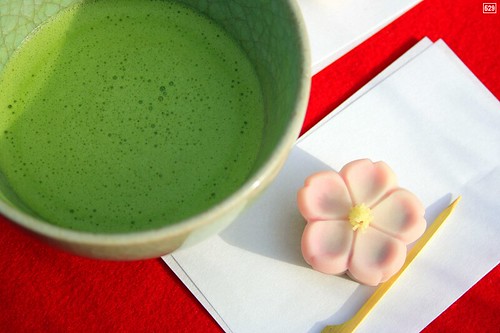
After Zen made its way to Japan, the ever-productive and disciplined Japanese made sure that they found an effective way to infuse mindfulness, the practice through which one achieves Enlightenment, into everything they think, say and do. Many of the ancient arts and culture that survive until today are the testament to that admirable effort.
In 1967, roughly eight centuries after Zen has been introduced to Japan, a world-famous Japanese writer, Yukio Mishima, came to Thailand to carry out research for one of his books, "The Temple of Dawn." Mishima did not find what he was looking for, a Theravada interpretation of consciousness and rebirth as taught to the general public. In fact, Mishima even remarked through the novel's fictional character, Mr Honda, that all he found in Thailand was the emphasis on dana (giving) and the stories of Lord Buddha's last 10 lives, Jataka.
A little embarrassing, one must admit. Today, 41 years after Mishima's casual but truthful remark in that novel, little has changed in Thailand. If there is change of any sort, it does not become for the better. For the society seems to be more preoccupied in examining, with a magnifying glass, the various editions of the Hindu-inspired Jatukham amulets rather than being absorbed in learning how Lord Buddha attained his Enlightenment.
Even if there are more books on mindfulness practice now than there were 41 years ago, it still does not mean that the Thais have been actively practising it. At least not to the level the Japanese have. Perhaps we have to thank the late Mr Mishima for pointing out our weakness for us.
Why Most Thais are Not Interested in Enlightenment
Let us try to answer Mr Mishima, and ourselves, why most Thais are not interested in the most important aspect, the raison d'etre, of Buddhism. One obvious argument is the fact that the Thai society has, for centuries, been blessed with agricultural abundance and relative peace. Compared to the centuries of civil wars and harsh natural disasters that Japan has had to endure, Thailand has not seen that much suffering. In addition, the Japanese's knack of keenly observing the changes in their four seasons also helps them to understand Buddhist Law of Impermanence better than us Thais who are surrounded by year-round evergreen trees.
The Chinese sages got it right when they say, "When one has not yet seen one's coffin, one does not shed tears." It is the complacency, a false sense of security, that made us Thai people feel that suffering is too far-flung a concept to think about in our everyday living. The ability to see suffering, or changes that lead to suffering, is the first trigger for one's quest for the Enlightenment.
Therefore, one could argue that the severe sufferings the ancient Japanese had to endure was a "blessing in disguise."
For those who have not practised mindfulness and experienced the "trailer" of what Enlightenment could be, the attempt to understand nibbana is literal at best. And it is this literal approach that further alienates Buddhist Enlightenment from a layperson's everyday life.
The Problem with our Literal Approach to Nibbana
First, it is a linguistic problem. We Thais, since our primary school years, were taught that Lord Buddha entered Maha Parinibbana (The Great Enlightenment) upon his death. Therefore, consciously or not, the word nibbana to the Thai ear usually rings in the image of death. Therefore, for those who did not have enough exposure to the essence of Buddhism, nibbana seems to be the stage that one can only enter after dying.
Needless to say, this misconception made nibbana something that no one wants to rush into. In fact, subconsciously, we may not even want to touch it with a ten-foot pole. Isn't it startling that the key message that Lord Buddha wanted to convey suddenly has become a taboo subject in Thailand? Perhaps regrettable is a more appropriate word.
The late Ven Buddhadasa had done his best to correct this by educating us Thais that in fact nibbana is something that is attainable while we are still alive, and should be every Buddhist's goal. Even if we could not reach the Ultimate Enlightenment yet, the late Ven Buddhadasa kindly suggested, at least we should try to frequently experience the "mini-Enlightenment" in our everyday life. The way to achieve it, he pointed out, is through Vipassana (mindfulness) meditation. Very Zen-like teaching, if one may add.
Professor Saeng Jan-ngam, a respectable Buddhist scholar from Chiang Mai, gave us another reason why we Thais tend not to be enthusiastic about nibbana. In his book, Buddhasasanavidhya, Prof Saeng pointed out that ordinary people only understand ordinary pleasure, not knowing that there could be a far more profound state of happiness than the worldly ones.
As a result, when they learn, through books, that nibbana does not have that kind of pleasure but offers a sustainable peace and happiness, they can not grasp the magnitude of its benefits and therefore do not see any appeal in trying to "reach somewhere" where none of the pleasure they know is available.
More important, Prof Saeng pointed out, is our false attachment to the concept of "self." For the untrained mind, the idea of total riddance of the "self" does not seem to be the ideal stage to aim for. "How can I feel happiness," they would argue, "when myself does not exist?"
Regrettably, it is this very misunderstanding of nibbana that gives a loophole for imposters to jump in and distort Lord Buddha's teaching by claiming that the "self" still exists in "the place called nibbana." This teaching is by far the most dangerous teaching around town these days, usually accompanying a request for a huge donation to "guarantee one's place in different levels of heavens."
Why we Thais should Attempt to Understand Nibbana
Therefore, at the very least, the attempt to properly understand Buddhist Enlightenment would give us immunity from falling into the danger of false teaching. It would not only help prevent us from becoming financially bankrupt as some unfortunate victims were led into, but also from being morally corrupted as a result of following the wrong path. The path is only downward for those with a wrong understanding, Lord Buddha himself gravely warned. This means that even if we are not Enlightened in this life yet, at least we should try to prevent ourselves from falling into the wrong path, because what it entails is endless suffering.
Simply put, the society that does not put Enlightenment as one of its top priorities is an "unaware" society. We are unaware that we are living mindlessly. There is the sad story of a chicken that continues to run around even after its head has been cut off. Did the body know where it was going? Did the body even realize that it is already dead? Regrettably, it would be only a matter of moments before the body finally drops to the ground, contracting in a final spasm, eventually becoming still, completely dead.
A painful analogue, we agree, but it could not be more apt to describe a Buddhist society that does not actively promote the practice of mindfulness so that its people can at least experience the "mini-Enlightenment", achieving the peace within, so that together they could generate the peace without. Blessed with the privilege of being in a Buddhist country, let us make the most out of it. Let each and every one of us shows the world that we know a thing or two about Buddhist Enlightenment.




 Posts

